A promise four hundred years old finally becomes ground under Israel's feet. But Joshua is less a war story than a long meditation on a single, steadying claim: the God who makes promises keeps them, down to the last word.
I · The Threshold
More than real estate
Moses is dead. For forty years he had carried this people on his back through the wilderness, and now the man who split the sea and climbed the mountain lies buried in Moab, having seen the land only from a distance. Israel stands at the edge of the Jordan with nothing but a promise, and into that silence God speaks to Moses' young assistant: "Moses my servant is dead. Now therefore arise, go over this Jordan." The wilderness is over. The threshold has come.
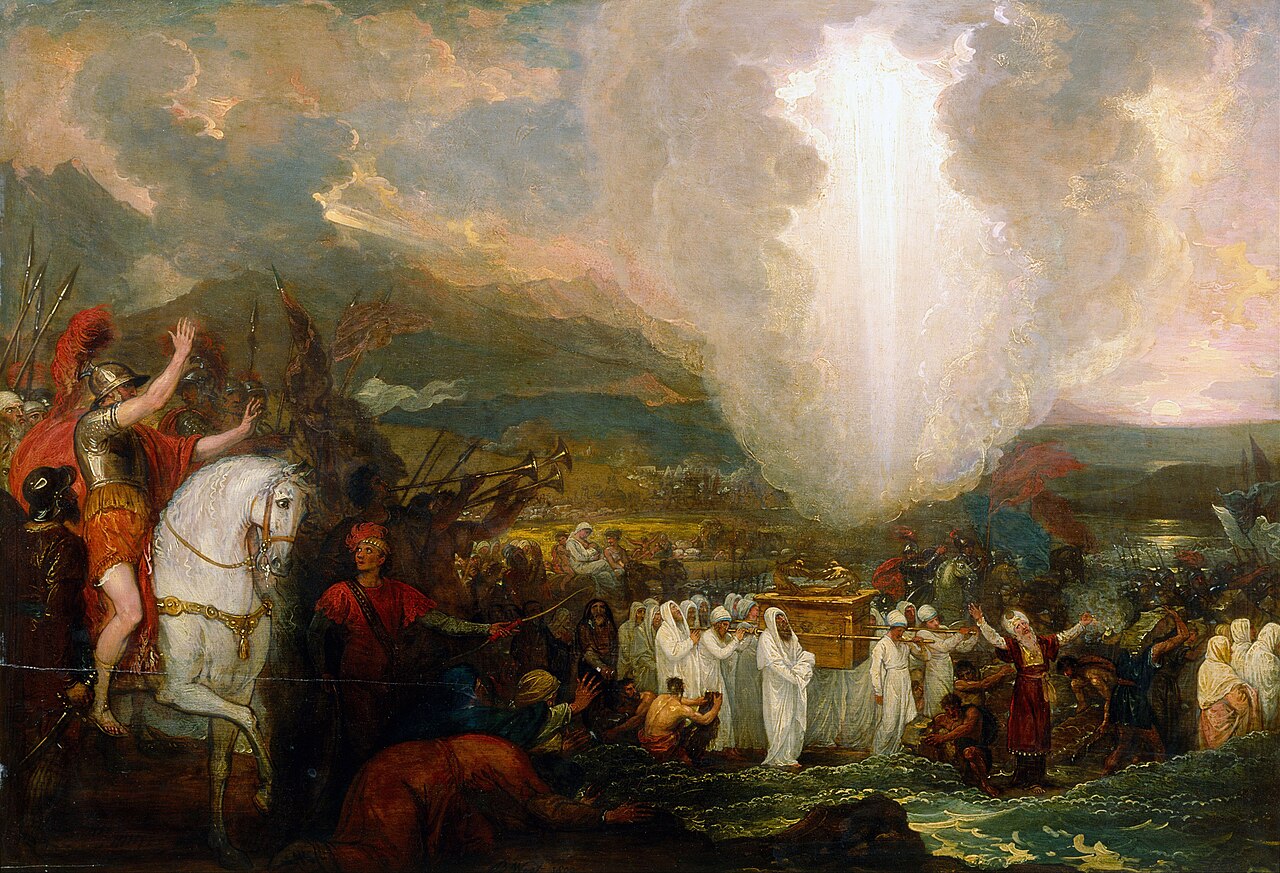
Across on dry ground. Benjamin West, “Joshua Passing the River Jordan with the Ark of the Covenant” (1800). The priests carry the ark into the flooded river and the waters heap up — the Red Sea all over again, staged so that a new generation would have a rescue of its own to remember.
Public domain, via Wikimedia Commons.
It is tempting to read Joshua as a military chronicle, and on the surface it is one. But the book itself keeps pulling your eyes higher, because in the Bible the land was never merely real estate. From the first pages of Genesis, land has meant the place where God dwells with His people in rest and blessing. Eden was such a place, and it was lost. The promise to Abraham of a land was God beginning, in one family and one country, to win back what humanity had thrown away. So when Israel crosses the Jordan, something larger than a border is being crossed. A people is coming home to live with their God in a good land He is giving them. Canaan is a foretaste of Eden restored, and a down payment on a still greater inheritance the New Testament will not let us forget.
The book divides cleanly in two. Chapters 1 to 12 tell how Israel took the land; chapters 13 to 24 tell how Israel divided it. The first half rings with trumpets and falling walls; the second reads like a surveyor's deed, full of boundary lines and town names. Both halves are pressing the same truth from different sides, and near the center of the second the writer finally says it without a metaphor:
“
Not one word of all the good promises that the Lord had made to the house of Israel had failed; all came to pass.
Joshua 21:45
That sentence is the thesis of the whole book. Strip away the battles and the borders and what remains is a single, load-bearing claim about the character of God: He says what He will do, and then He does it. Joshua was written to a people who needed to believe that, and it has been kept for every people since who have stood at their own Jordan, holding a promise and wondering whether God can be trusted to keep it.
Setting
Canaan, c. 1406–1375 BC on the traditional chronology, the generation after the exodus.
Author
Traditionally Joshua himself for the bulk of it, with later editorial additions (including the account of his death).
Big idea
God is faithful to His covenant; His people are called to courageous, wholehearted obedience in response.
Christ in it
Joshua (Hebrew Yehoshua, "the LORD saves") bears the name of Jesus and leads God's people into their inheritance and rest.
II · The Charge
What "be strong and courageous" actually means
Before Israel takes a step, God says one thing to Joshua three times over: be strong and courageous (1:6, 7, 9). We have turned that line into a fridge magnet, a generic shot of confidence. The text means something far more specific, and far more bracing.
Joshua is not told to find courage inside himself. He is told to be courageous for two reasons that have nothing to do with his nerve. The first is a presence: "Just as I was with Moses, so I will be with you. I will not leave you or forsake you" (1:5). The courage God commands is not bravado; it is the calm of a man who knows Who is standing next to him. The second reason is a book:
8This Book of the Law shall not depart from your mouth, but you shall meditate on it day and night, so that you may be careful to do according to all that is written in it. For then you will make your way prosperous, and then you will have good success.
Joshua 1:8
Notice what the great conqueror is handed on the eve of war. Not a sword, not a battle plan, but a scroll. Israel's first weapon is Scripture soaked into the mind until it shapes the life. The promised success is not a guarantee of easy victories; it is the deep flourishing of a person whose obedience is fed by constant attention to God's word. Strip that away and "be strong and courageous" becomes empty cheerleading. Keep it, and you have the whole pattern of the faithful life: God's presence in front of you, God's word inside of you, and because of those two things, the freedom to walk toward the giants without flinching.
★ Worth noticing
The same charge runs like a refrain through these books and beyond. David gives it to Solomon (1 Chronicles 22:13). The risen Jesus tells His disciples the deeper version of it: "I am with you always, to the end of the age" (Matthew 28:20). Courage in Scripture is almost never self-generated. It is the natural posture of people who actually believe God is with them.
III · The Story, Scene by Scene
Reading Joshua with your eyes open
Each scene carries more than action. Watch for what the writer wants you to see.
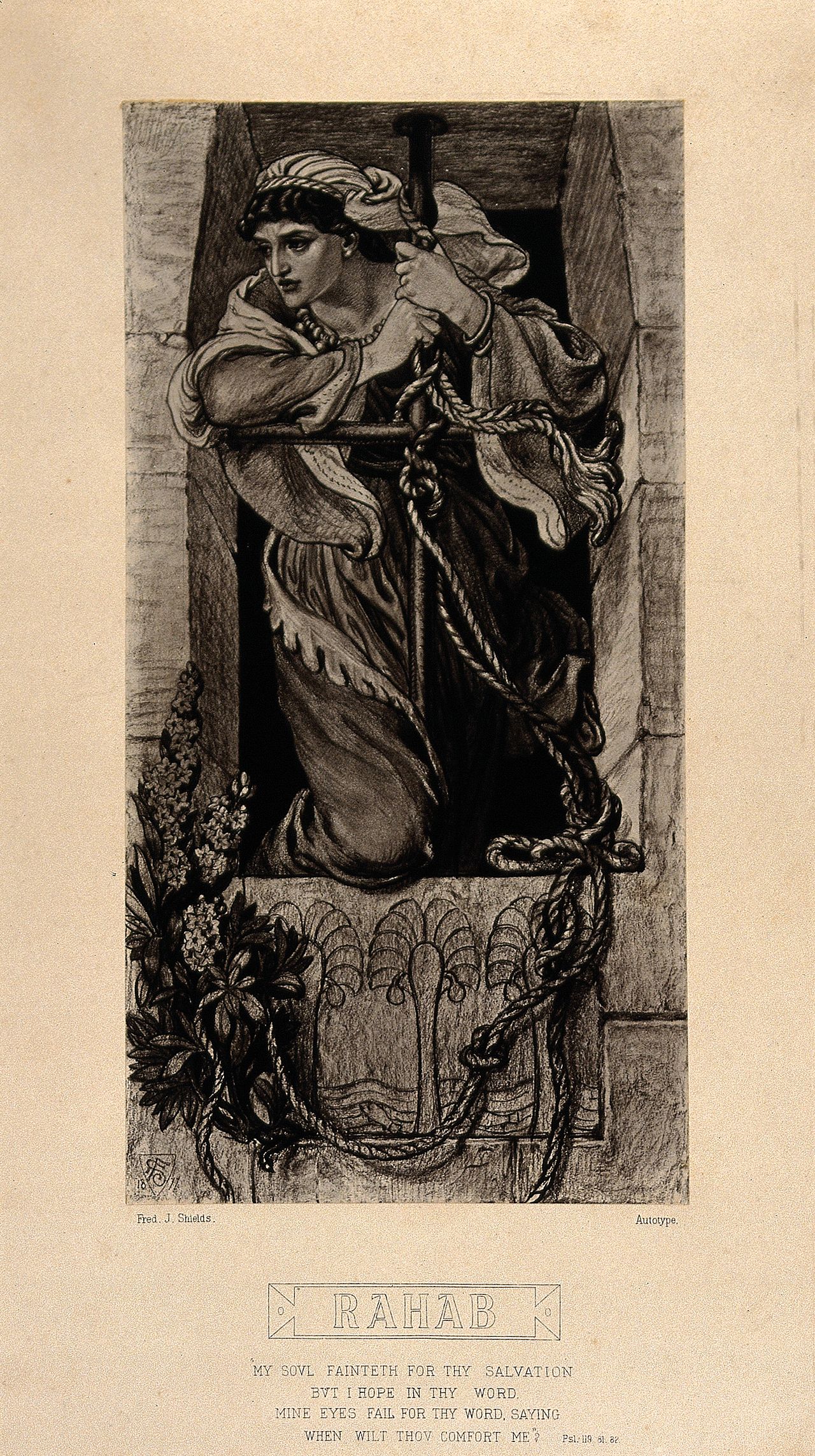
The scarlet cord. Rahab ties the scarlet cord in her window (Joshua 2), the sign that judgment would pass over her house. A Canaanite of bad reputation becomes the first in Jericho to throw herself on the mercy of Israel's God.
After a Wellcome Collection plate, CC BY 4.0, via Wikimedia Commons.
Joshua 2
Rahab and the scarlet cord
Before a single battle, the narrative pauses on a Canaanite prostitute. Rahab has heard what God did at the Red Sea and forty years later still trembles at it, while her whole fortified city does not. She hides the spies, confesses that "the Lord your God, he is God in the heavens above and on the earth beneath" (2:11), and hangs a scarlet cord in her window so that judgment will pass over her house. If that image rings a bell, it should. The writer is showing you, on page one, that the conquest is not about bloodline. It is about who will throw themselves on the mercy of the true God, and a foreign woman of bad reputation is the first to do it.
Joshua 3–4
The Jordan stands still
The priests carry the ark into the flooded river, and the moment their feet touch the water, it heaps up and the nation crosses on dry ground. This is staged, deliberately, as the Red Sea all over again: God even says He does it "so that they may know that, as I was with Moses, so I will be with you" (3:7). Most of the people crossing were children or unborn at the exodus. They did not see the sea split. So God gives them their own water, their own dry ground, their own story. Then He commands twelve stones piled at Gilgal for one reason, named twice: "when your children ask… you shall let them know." The crossing is not just a miracle. It is a sermon set in stone, designed to carry faith to a generation that wasn't there.
Joshua 5
The commander with the drawn sword
Outside Jericho, Joshua meets a man with a sword and asks the soldier's question: "Are you for us, or for our adversaries?" The answer reframes everything: "No; but I am the commander of the army of the Lord." God has not come to take sides in Joshua's war. Joshua has been summoned into God's. The general of Israel takes off his sandals on holy ground, and we are reminded who is actually leading this campaign. It was never Joshua.
Joshua 6
Jericho falls to a procession
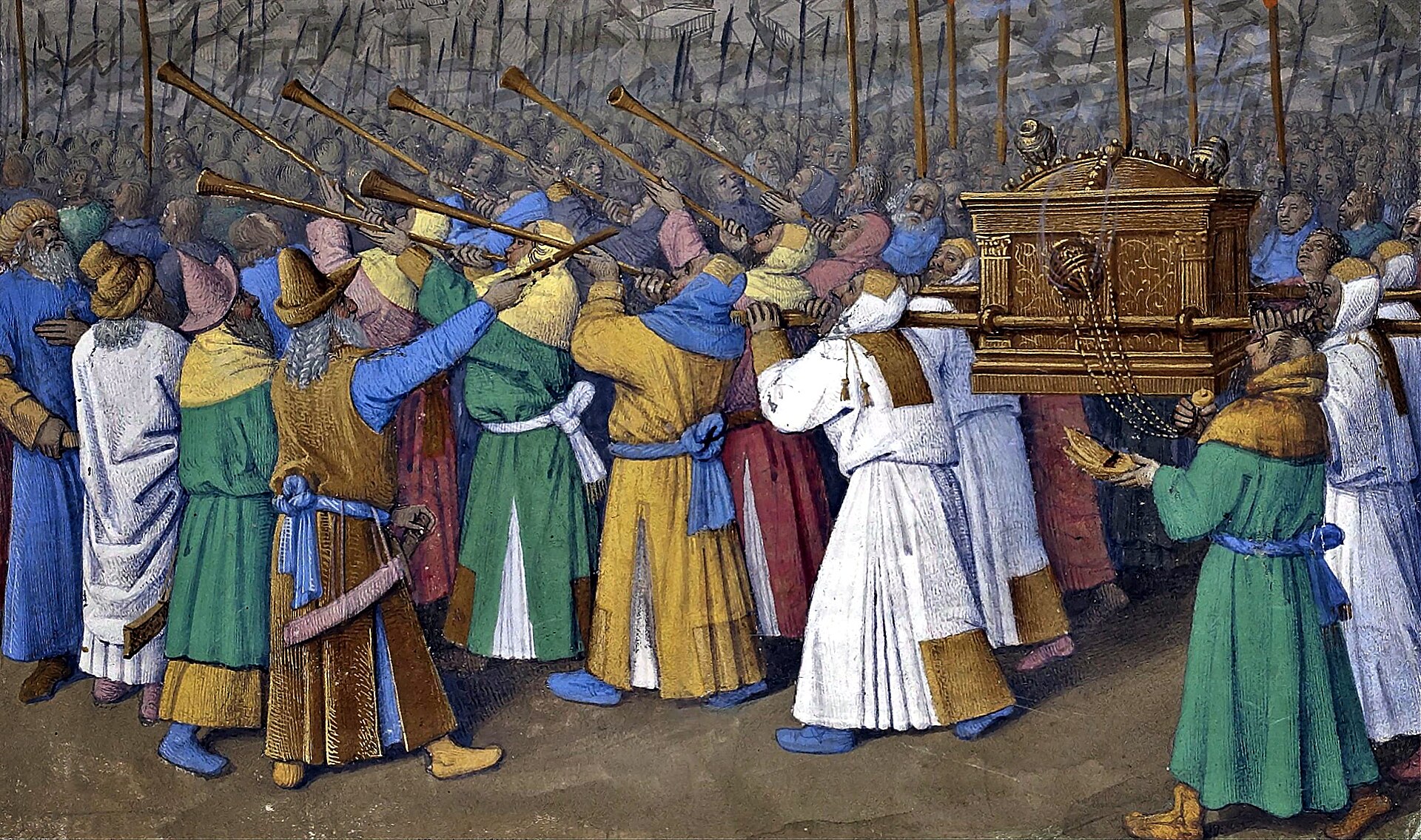
God's battle plan is almost comic as military strategy: march around the city once a day for six days, seven times on the seventh, blow trumpets, and shout. No siege works, no ladders, no ram. When the walls collapse, no one can mistake whose victory it is. That is precisely the design. Hebrews remembers it as faith: "By faith the walls of Jericho fell down, after they had been encircled for seven days" (Hebrews 11:30). And out of the rubble, only one household stands, marked by a scarlet cord.
Joshua 7–8
Achan, and the cost of a hidden sin
Then comes the gut-punch. Tiny Ai routs Israel, and God tells Joshua why: "Israel has sinned" (7:11). One man, Achan, had taken plunder devoted to God, yet God says Israel sinned, because in the covenant no sin is ever truly private. Achan buried silver and a robe under his tent and thought no one saw; the cost surfaced in dead soldiers on a hillside. Place him beside Rahab and the writer's point lands like a hammer. The Canaanite outsider lives by faith; the Israelite insider perishes by greed. Belonging to God's people has never been about the right last name.
Joshua 9
The treaty Joshua never prayed about
The Gibeonites arrive in moldy bread and worn-out sandals, pretending to be from a distant land, and Israel signs a peace treaty with them. The verdict is quiet and devastating: "they did not ask counsel from the Lord" (9:14). Joshua, who could not lose a battle when he listened, gets fooled the moment he trusts his own eyes. Centuries later God will still hold Israel to that oath (2 Samuel 21), a reminder that even our prayerless decisions have long lives.
Joshua 10
The day the sun stood still
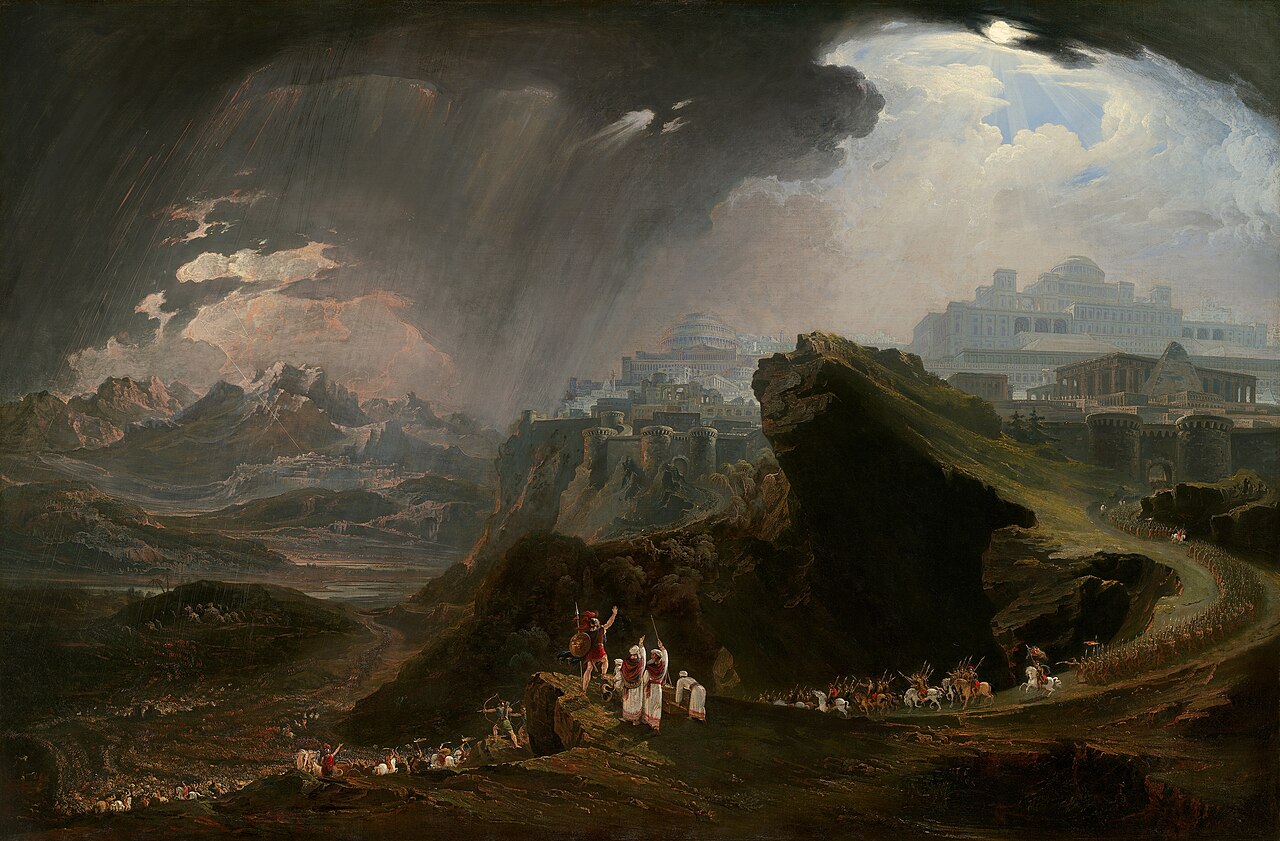
Five kings attack Gibeon for surrendering, and Joshua marches all night to defend the people he was tricked into protecting. In the heat of it he prays the boldest prayer in the Old Testament, that the sun would stop, and it does. Endless ink has been spilled on the astronomy, but the writer tells you flatly what matters: "There has been no day like it before or since, when the Lord heeded the voice of a man, for the Lord fought for Israel" (10:14). The miracle is not the headline. The headline is that God fights for His people.
Joshua 13–21
The deed of inheritance
The long second half can feel like reading a property registry, and that is the point. God parcels out the land tribe by tribe, by lot, at Shiloh. Eighty-five-year-old Caleb strides up to claim the hill country he was promised forty-five years before, asking for the part with the giants still in it. The cities of refuge are set apart. Every boundary line is a receipt: the promise, paid in full, surveyed and signed.
The walls fall to a procession. Jean Fouquet, The Taking of Jericho (c. 1470–75). The priests carry the ark and blow the rams’ horns; no siege works, no battering ram — only a march, trumpets, and a shout, so no one could mistake whose victory it was. Public domain, via Wikimedia Commons.“Sun, stand still.” John Martin, “Joshua Commanding the Sun to Stand Still upon Gibeon” (1816). Martin dwarfs the armies beneath a churning sky — the day the Lord “heeded the voice of a man, for the Lord fought for Israel.”
National Gallery of Art, Washington. Public domain, via Wikimedia Commons.
See the Land
The maps of Joshua's world
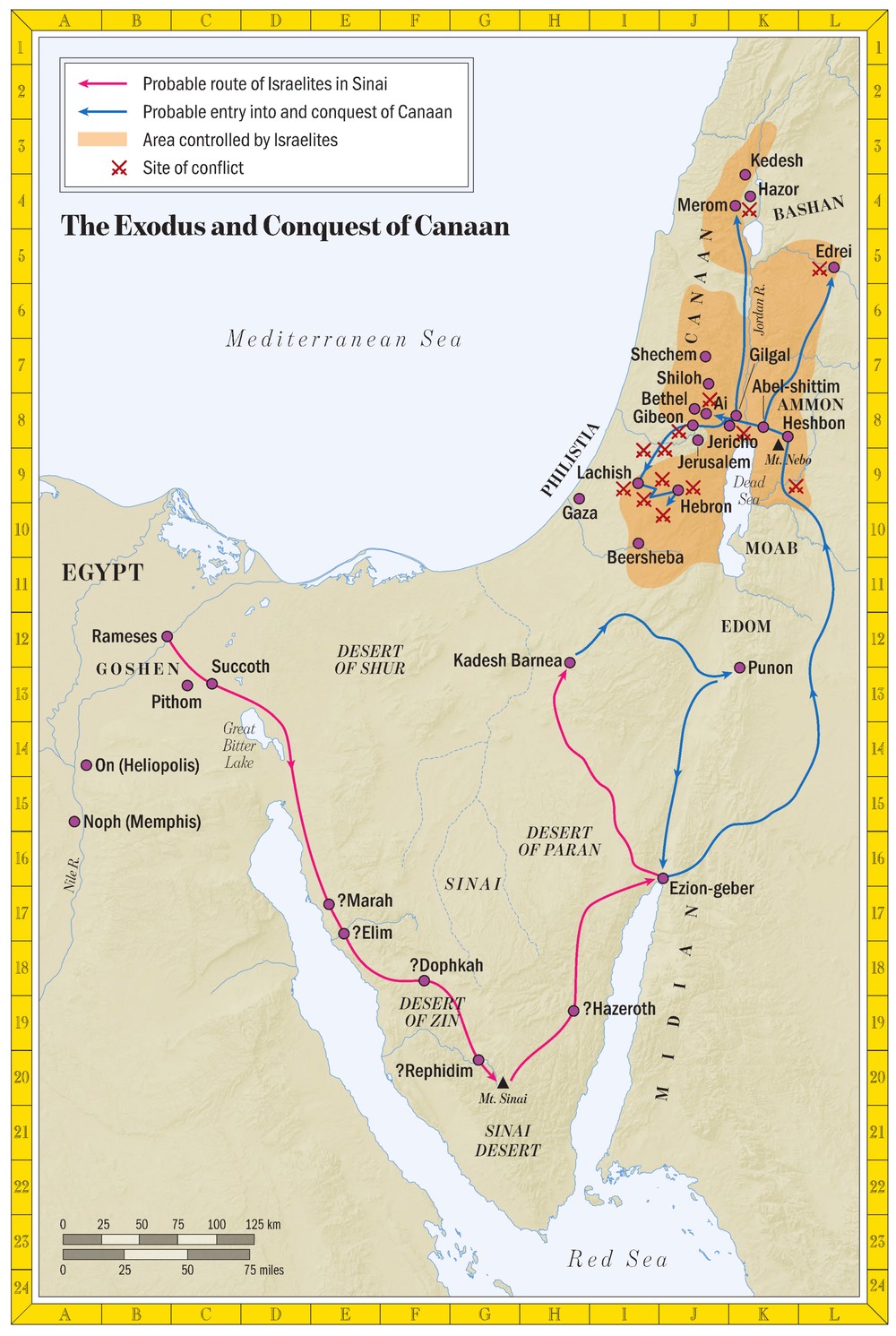
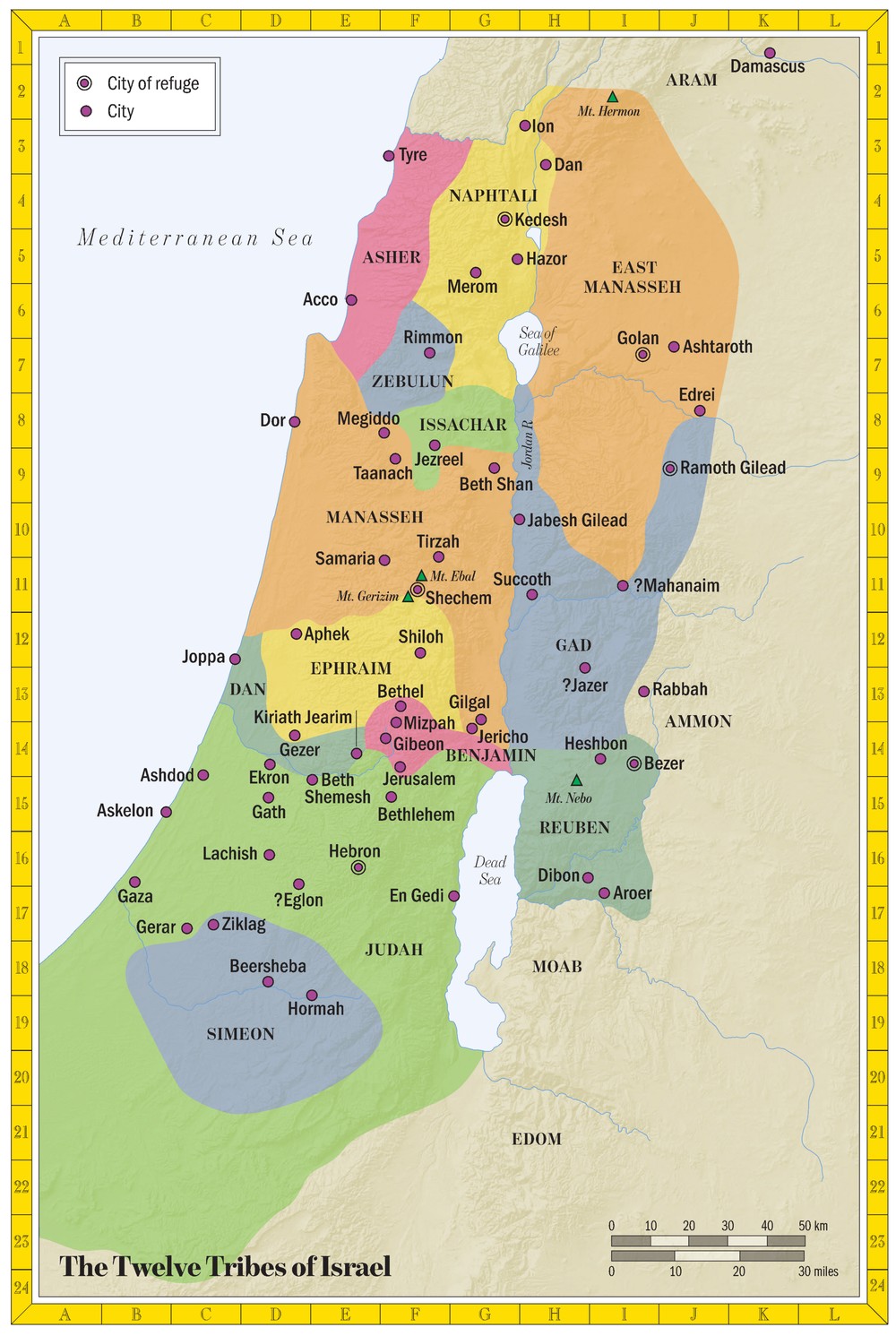
Three maps to set the geography in your mind: the conquest of the land, the tribal allotments, and the cities of refuge. On the allotment map, click any tribe to read its inheritance. Click any map to enlarge it.
1. The Conquest of Canaan
Joshua's strategy was to drive into the center of the land and split it in two, then turn south, and finally north. This map traces Israel's long road out of Egypt, through the wilderness, and into the land, with the sites of conflict marked.
Map: Biblica, Inc. — “Open Bible Maps,” CC BY-SA 4.0
Central campaign
From the base at Gilgal: Jericho falls (ch 6), then Ai (ch 8), driving a wedge that splits the land. The Gibeonites make peace by trickery (ch 9).
Southern campaign
Five Amorite kings attack Gibeon. Joshua marches all night and routs them as the sun stands still, then takes the southern cities in quick succession (ch 10).
Northern campaign
Jabin of Hazor gathers a coalition with chariots "like the sand on the seashore." Joshua strikes at the Waters of Merom and burns Hazor (ch 11).
2. The Twelve Tribal Allotments
Once the land was taken, it was divided by lot among the tribes. Click any tribe below to read its inheritance and what the rest of Scripture says about it.
Map: Biblica, Inc. — “Open Bible Maps,” CC BY-SA 4.0
Explore each tribe
Tribal Allotment
Pick a tribe
Choose any tribe above to read who settled there, the cities they held, and what the rest of Scripture says about them.
Note the half-tribe of Manasseh, split by the Jordan, and that Levi received no land at all.
Going Deeper · The missing tribe
Count the tribes and the math feels off. Levi gets no territory, because "the Lord God of Israel is their inheritance" (Joshua 13:33); the priestly tribe lived in forty-eight scattered towns instead, salt worked through the whole nation. To keep the number at twelve, Joseph is counted as two tribes through his sons Ephraim and Manasseh. So there are twelve land-holding tribes, with Levi set apart for the service of God in the middle of them all — a people whose portion was not a place but God Himself.
Tribal Allotment
Asher
The northwest, a strip of fertile coast running up toward Phoenicia (Joshua 19:24–31). The name means "happy" or "blessed."
Key area
The coastal plain near Acco and Mount Carmel's slopes.
Watch for
Asher never drove out the coastal Canaanites and "lived among" them (Judges 1:31–32) — a foothold the book of Judges shows turning costly.
Tribal Allotment
Naphtali
The northern hill country west of the Sea of Galilee (Joshua 19:32–39), with Hazor on its border and Kedesh, a city of refuge, within it.
Key cities
Kedesh-Naphtali, near Hazor.
Watch for
Barak, who fought alongside Deborah, came from Kedesh in Naphtali (Judges 4). Isaiah promised this dark northern region would one day see a great light (Isaiah 9:1–2).
Tribal Allotment
Zebulun
Lower Galilee, set between the Sea of Galilee and the Mediterranean (Joshua 19:10–16). Jacob had linked Zebulun to the sea and to trade (Genesis 49:13).
Key area
The hills around what would later be Nazareth.
Watch for
Jesus grew up in territory once allotted to Zebulun and Naphtali (Matthew 4:13–16).
Tribal Allotment
Issachar
The rich farmland of the Jezreel Valley (Joshua 19:17–23), the breadbasket and the battlefield of northern Israel.
Key area
The Jezreel (Esdraelon) Valley, below Mount Tabor.
Watch for
Issachar later produced men "who had understanding of the times, to know what Israel ought to do" (1 Chronicles 12:32).
Tribal Allotment
Manasseh — the divided tribe
Joseph's elder son, given a double portion split by the Jordan. West Manasseh held central hill country; East Manasseh held Bashan and northern Gilead (Joshua 13; 17).
Key fact
The daughters of Zelophehad received their father's inheritance here, a landmark moment for inheritance law (Joshua 17:3–6).
Watch for
Being split by the river left East Manasseh exposed and often the first to suffer in later invasions.
Tribal Allotment
Ephraim
Joseph's younger son, given the greater blessing (Genesis 48). Central hill country holding Shiloh, where the tabernacle stood for centuries, and Shechem (Joshua 16).
Key cities
Shiloh and Shechem.
Watch for
Joshua himself was an Ephraimite. Ephraim grew so dominant that its name became shorthand for the whole northern kingdom.
Tribal Allotment
Dan
First given a small territory on the coastal plain beside the Philistines (Joshua 19:40–48). Pressed hard by the Amorites, much of the tribe later migrated far north and seized Laish, renaming it Dan (Judges 18).
Key fact
Samson, the strongman judge, was a Danite.
Watch for
"From Dan to Beersheba" became the way Israel described its whole length, north to south.
Tribal Allotment
Benjamin
The smallest tribe by numbers, wedged between Ephraim and Judah (Joshua 18:11–28). It held the border around Jerusalem, plus Jericho, Bethel, and Gibeon.
Key fact
Saul, Israel's first king, and later the apostle Paul, both came from Benjamin.
Watch for
Judges ends with a civil war that nearly wipes Benjamin out entirely (Judges 19–21).
Tribal Allotment
Judah — the royal tribe
The largest southern territory (Joshua 15), and the tribe Jacob said would hold the scepter (Genesis 49:10). It contained Hebron, and later Bethlehem and Jerusalem.
Key cities
Hebron (a city of refuge), Bethlehem, Jerusalem.
Watch for
David came from Judah, and the New Testament calls Jesus "the Lion of the tribe of Judah" (Revelation 5:5).
Tribal Allotment
Simeon
Given towns inside Judah's southern territory rather than a block of its own (Joshua 19:1–9), including Beersheba.
Key fact
Jacob had prophesied Simeon would be "divided" and "scattered" in Israel (Genesis 49:7).
Watch for
Over time Simeon was largely absorbed into Judah, exactly as foretold.
Tribal Allotment
Gad
Settled east of the Jordan in the heart of Gilead (Joshua 13:24–28), choosing the land for its good pasture (Numbers 32).
Key city
Ramoth-Gilead, a city of refuge.
Watch for
The Gadites were fierce warriors "swift as gazelles upon the mountains" (1 Chronicles 12:8), but their exposed eastern land made them an early target for raiders.
Tribal Allotment
Reuben
Jacob's firstborn, who forfeited his birthright (Genesis 49:3–4). Reuben chose to settle east of the Jordan, east of the Dead Sea (Numbers 32; Joshua 13).
Key fact
Reuben, Gad, and East Manasseh built a great altar by the Jordan that nearly triggered a civil war until it was explained as a witness, not a rival (Joshua 22).
Watch for
Settling outside the Jordan kept these tribes on the margins of Israel's later life.
3. The Six Cities of Refuge
God set apart six towns where a person who killed someone accidentally could flee and be safe from the avenger of blood until a fair trial (Joshua 20). Three sat west of the Jordan, three east, spaced so that no Israelite was ever far from refuge. You can find all six marked as green squares on the tribal map above.
West of the Jordan
Kedesh Far to the north, in the hills of Naphtali.
Shechem In the central hill country of Ephraim.
Hebron In the southern territory of Judah.
East of the Jordan
Golan In Bashan, in the half-tribe of Manasseh.
Ramoth-Gilead In Gilead, in the territory of Gad.
Bezer On the eastern plateau of Reuben.
★ Why this matters
These six towns drew a careful line between murder and manslaughter that most of the ancient world never bothered with, protecting the innocent from blood-vengeance and the land from being defiled by wrongful death. But look closer and there is a picture of the gospel hiding in the law. A guilty-feeling person runs for their life to a place of refuge God Himself appointed, and stays safe there until the death of the high priest sets them free to go home (Numbers 35:25–28). A death that releases the guilty; a refuge God provides. The writer of Hebrews seems to have these cities in mind when he describes believers as those who "have fled for refuge" to lay hold of the hope set before us (Hebrews 6:18).
IV · Going Deeper
Three things the book won't let you miss
Already, and not yet
Here is a tension that will save you a lot of confusion, not just in Joshua but in the whole Christian life. God declares the entire land already given: "I have given you the land" (1:3). And yet Israel has to fight for it, town by town, and even at the end God says, "there remains yet very much land to possess" (13:1). So which is it, given or not given? Both. The victory is settled in heaven and unfinished on the ground at the same time. The New Testament lives in exactly this tension. You are already saved, already seated with Christ, already given every spiritual blessing, and you are also told to fight sin, to put on armor, to take ground you have not yet taken. Joshua teaches you to hold the certainty and the struggle together without letting go of either. The promise is sure. The work is real. Rest in the first; get up and do the second.
Sin is never a private transaction
The Achan story offends modern instincts, and it is meant to. We assume that what a person does behind closed doors is their own affair, but Joshua flatly denies it: one man's hidden greed got thirty-six soldiers killed and stopped a nation in its tracks, and God called it Israel's sin, not just Achan's. We are more connected than we like to admit. The husband's secret, the leader's compromise, the small dishonesty no one sees, these things leak. They cost people who never chose them. This is not a comfortable doctrine, but it is a true one, and it cuts both ways: if your sin can wound the whole body, then your faithfulness, however unseen, can strengthen it. You are not as alone as you feel.
A rest that doesn't quite arrive
Near the end, the book exhales: "the Lord gave them rest on every side" (21:44). The wandering is over; the people are home. It should be the happy ending. And yet something nags. The land is not fully cleared, the peace will not hold a single generation (Judges is coming), and centuries later the book of Hebrews makes a startling claim about this very moment:
8For if Joshua had given them rest, God would not have spoken of another day later on. 9So then, there remains a Sabbath rest for the people of God.
Hebrews 4:8–9
Joshua's rest was real, but it was a rest with an asterisk, a deposit pointing past itself. The true and final rest, the one Eden lost and Canaan only sketched, does not come through a stretch of conquered dirt. It comes through a greater Joshua. Which is exactly where the book has been quietly pointing all along.
V · The Hard Question
What do we do with the violence?
An honest study of Joshua cannot tiptoe around its hardest feature: God commands Israel to destroy the Canaanite cities, and many sincere readers find it genuinely troubling. It is right to feel the weight of that rather than explain it away. A few things, held together, let us face it honestly instead of either flinching or pretending it's simple.
It is judgment, not genocide for land's sake. Centuries earlier God had told Abraham his descendants would wait four hundred years to receive the land, because "the iniquity of the Amorites is not yet complete" (Genesis 15:16). God waited four centuries, enduring a culture that practiced ritual prostitution and the burning of children to its gods (Leviticus 18:21–25), before judgment fell. The conquest is presented as a delayed sentence on a specific, deeply violent society, not a license for ethnic cleansing.
It is judicial, not racial. The clearest proof is the people themselves. Rahab the Canaanite throws herself on God's mercy and is saved, grafted into Israel and eventually into the family tree of Jesus. Achan the Israelite takes what is God's and falls under the same judgment as Jericho. The dividing line is never ethnicity; it is response to God. Anyone, from any nation, who turned to Him lived.
The language is partly the rhetoric of its age. Joshua reports cities "utterly destroyed" that are clearly still populated a few chapters later, and Judges opens with Canaanites everywhere. Ancient war accounts routinely used sweeping total-victory language the way we say a team "annihilated" their rivals. Recognizing that convention doesn't dissolve the difficulty, but it does caution us against reading every line with wooden literalism.
Where it finally rests
None of this makes Joshua comfortable, and it should not. What it does is locate the conquest where the Bible locates it: as a sobering, time-bound picture of a holy God's judgment against entrenched evil. And it sets up the deepest answer of all. The same God who judged Canaan would one day take the judgment His own people deserved onto Himself at the cross. The wrath that fell on Jericho is the wrath that fell on Jesus, so that it need never fall on us. A God who does not finally judge evil is not good news to anyone who has suffered it. A God who judged it in His own Son is the gospel.
VI · The Charge to Choose & Christ in Joshua
"Choose this day"
At the very end, old and near death, Joshua gathers the tribes at Shechem, the exact spot where God first promised Abram this land generations before (Genesis 12:6–7). He retells the whole story in God's own voice, and then forces the question the entire book has been building toward.
15And if it is evil in your eyes to serve the Lord, choose this day whom you will serve… But as for me and my house, we will serve the Lord.
Joshua 24:15
What follows is one of the strangest pastoral moves in Scripture. The people enthusiastically promise to serve God, and Joshua tells them flatly, "You are not able to serve the Lord" (24:19). He is not trying to discourage them. He is puncturing the cheap confidence of people who think covenant faithfulness is a matter of willpower. Real obedience has never come from gritted teeth. It comes from grace that changes the heart, and Joshua wants them to feel the gap between their good intentions and their actual ability, because only people who know they cannot do it on their own will ever lean hard enough on the One who can.
❖
And that is the thread to pull as the book closes. The leader's name is Yehoshua, the very name that comes into Greek as Jesus. He leads God's people through the waters and into their inheritance. He fights battles that are really God's. He gives a rest that points past itself to a greater rest. A foreign woman is saved by a scarlet cord and folded into the people of God. Every one of these is a sketch, drawn centuries early, of the One the New Testament announces as the true and better Joshua: the Savior who leads us through death into the inheritance that does not fade, and gives the rest that finally holds.
People to Know
Three lives in the book of Joshua
❖
Joshua
Successor of Moses
TribeEphraim
Name means"The LORD saves"
Defining actLed the conquest
Lived110 years
"Be strong and courageous."Joshua 1:9
One of only two spies who trusted God forty years earlier. Lesson: courage is not the absence of fear but obedience that keeps walking while afraid, anchored to God's presence and word.
Rahab
The Canaanite who believed
FromJericho
Known asA prostitute
SignThe scarlet cord
LegacyIn Jesus' line
"The LORD your God, he is God in the heavens above and on the earth beneath."Joshua 2:11
She risked her life on a God she had only heard about. Lesson: grace reaches the least likely first. Rahab lands in Hebrews 11, James 2, and the genealogy of Christ (Matthew 1:5).
Caleb
The old warrior of faith
TribeJudah
Age at claim85 years
InheritanceHebron
Marked byWholehearted faith
"Give me this hill country… I am still as strong today as I was in the day Moses sent me."Joshua 14:11–12
He waited forty-five years to receive a promise made in his prime, then asked for the part with giants in it. Lesson: faith does not retire, and it does not ask for the easy ground.
For Discussion & Reflection
Study questions
Talk it through
God roots Joshua's courage in His presence and His word, not in Joshua's nerve. Where are you currently trying to manufacture courage instead of drawing it from those two wells? Discuss
Israel piled up stones so that one day their children would ask, "What do these mean?" What are the "stones" in your life or church, and are they prompting the questions they were meant to? Discuss
The book sets Rahab the saved outsider beside Achan the condemned insider. How does that pairing challenge the way we decide who's really "in"? Discuss
"Already given" and "still to be taken" describe the land and also the Christian life. Where do you most need to rest in what's settled, and where do you most need to get up and fight? Discuss
Be honest as a group: how do you sit with the conquest's violence? What helped, and what still aches? Discuss
Reflect quietly
Joshua 21:45 says not one of God's good promises failed. Name the promise you're still waiting on. What would it look like to wait the way Caleb waited, for forty-five years, without losing heart? Reflect
Achan's hidden thing surfaced as someone else's funeral. Is there a "devoted thing" buried under your tent right now, something taken or hidden that you've told yourself is private? Reflect
Joshua said, "You are not able." Where have you been serving God on willpower, and what would change if you admitted you can't, and leaned the full weight of that on Christ? Reflect
⚑ Leader Note
The conquest's violence is usually the question your group most wants to raise and is most afraid to. Name it early so it isn't quietly hanging over the whole evening. Aim for honesty over tidy answers: it is fine to say this is hard, to sit in the tension, and to walk slowly to the cross where that judgment lands on Jesus. If your group is newer, the "already / not yet" idea (the Going Deeper section) is the single most practically useful thing they'll carry out the door, so give it room. Close by reading Hebrews 4:8–9 aloud and letting the better-Joshua connection land.
Next in the Series
Module II · The Book of Judges
Joshua's generation served the Lord. The very next generation "did not know the Lord." What happens to a people when the story stops being told, and everyone does what is right in his own eyes?