Movement IV · 1 Samuel · Week 9 · 1 Samuel 8–12

Give Us a King

Israel wants a king "like all the nations," a visible man to follow instead of an unseen God. God grants the request, and the granting is itself a kind of judgment: sometimes He gives us exactly what we demand.

I · The Turning Point

The request that changed everything

This week is the pivot of the whole book. Everything before it built toward the question; everything after it lives with the answer. Israel, tired of trusting a God they cannot see, comes to the aging Samuel and demands a king like the surrounding nations. The tragedy is not that they wanted a king; God had always planned for one. The tragedy is why they wanted him, and the kind of king they had in mind. They wanted to trade the risk of faith for the comfort of looking normal, and God let them have it.

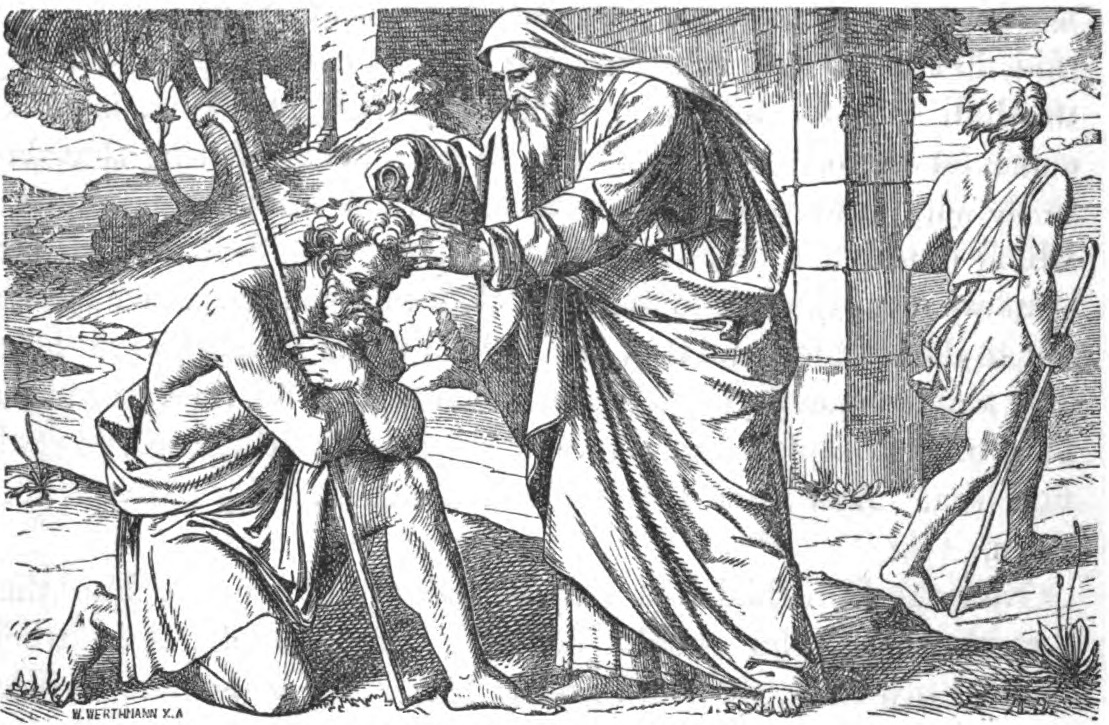
A painting of the prophet Samuel pouring oil over the head of Saul to anoint him the first king of Israel.
The king they asked for. Samuel anoints Saul (1 Samuel 10). A head taller than anyone else, Saul looked every inch the king the people wanted “like all the nations” — and God granted the request, though in it they had really rejected him “from being king over them.” Public domain, via Wikimedia Commons.

II · Walking Through the Story

The making of the first king

1 Samuel 8–10

"Give us a king"

The elders come to the aging Samuel and demand a king "like all the nations." Samuel is wounded; God tells him the deeper truth: "they have not rejected you, but they have rejected me from being king over them" (8:7). God grants the request and, through Samuel, spells out exactly what a king will cost them in sons, daughters, fields, and freedom. Saul, a head taller than anyone else, is anointed in private and then chosen in public, where they find him hiding among the baggage. The man they wanted looks every inch a king, and is already afraid.

1 Samuel 11–12

A promising start

Saul begins genuinely well. When Jabesh-gilead is threatened, the Spirit of God rushes on him, he rallies Israel, and wins a great victory, then refuses to take revenge on those who had doubted him. The kingdom is renewed at Gilgal. Samuel gives a farewell address, warning king and people alike that their only real safety, monarchy or no monarchy, is to fear and serve the Lord with all their heart.

III · The Heart of It

"A king like all the nations"

The request for a king in chapter 8 is more tangled than it first appears. God had always planned for Israel to have a king one day. The law of Moses anticipated it and even legislated for it (Deuteronomy 17:14–20), and the dying Jacob had promised the scepter to the tribe of Judah. So the problem was never the what. It was the why, and the when, and the kind of king they had in mind.

7Obey the voice of the people in all that they say to you, for they have not rejected you, but they have rejected me from being king over them. 1 Samuel 8:7

Israel wanted a king for all the wrong reasons: to be like everyone else, and to have a visible man to follow instead of an invisible God. They wanted to trade the risk of faith for the comfort of looking normal among the nations. So God gave them exactly what they asked for. Saul is the king the people would have designed for themselves: tall, strong, impressive, the obvious pick. He is also a warning that some of God's hardest judgments come not when He denies our requests but when He grants them. Be careful what you demand to be "like everyone else."

Going Deeper · A gift that is also a judgment

We usually picture God's judgment as a closed door, a prayer denied. First Samuel adds a harder possibility: sometimes the judgment is the open door. Israel got its king, and the getting was the punishment, because they had asked for the wrong thing for the wrong reason, and God, honoring their freedom, let them have it. It is worth praying with this in mind. Not everything we want is good for us, and one of God's mercies is that He sometimes says no. When He says yes to a thing we should not have wanted, that is not always blessing. It is sometimes the beginning of a lesson we insisted on learning the hard way.

People to Know

The people's king

Saul
The people's king
  • TribeBenjamin
  • AssetTall, impressive
  • FlawFear; disobedience
  • EndRejected

"I have sinned… because I feared the people and obeyed their voice."1 Samuel 15:24

Lesson: Looking the part is not the same as having the heart. Saul feared people more than God, and it slowly cost him everything.

For Discussion & Reflection

Study questions

Talk it through

  1. Israel wanted a king to be "like all the nations." Where does the church today reach for worldly forms of strength or security instead of trusting an unseen God? Discuss
  2. Sometimes God's judgment is to give us exactly what we demand. Have you seen that in your life or others'? How does it change the way you pray? Discuss
  3. The people rejected God's kingship without quite realizing that was what they were doing. How does that kind of drift happen so quietly? Discuss
  4. Samuel warned that their only safety, king or no king, was to fear the Lord. What "kings" do we install hoping they will make us safe? Discuss

Reflect quietly

  1. Is there something you are demanding from God right now that you should perhaps be relieved if He refuses? Reflect
  2. Where are you tempted to want the comfort of looking normal more than the risk of trusting God? Reflect

Next Week

Week 10 · The Fall of Saul; David Anointed

Two small failures cost Saul a kingdom, and God sends Samuel to Bethlehem to anoint a shepherd instead. 1 Samuel 13–16.