Home/The Weeks/Week 10

Movement IV · 1 Samuel · Week 10 · 1 Samuel 13–16

The Fall of Saul; David Anointed

Two failures, both of them small, cost Saul a kingdom, because God was never testing his competence. He was testing whether Saul would be a king under the King. Then Samuel goes to Bethlehem, and God chooses the one no one thought to call.

I · The Unraveling

How a kingdom is lost

Saul's downfall is quiet and almost mundane, which is exactly the point. There is no dramatic betrayal, no great atrocity, just two moments where he treats God's clear command as a suggestion he can improve on. He grows impatient and offers a sacrifice that was not his to offer. He is told to devote the Amalekites entirely to destruction and instead keeps the best of the plunder, then dresses it up as worship. Small things, we would say. God did not agree. A king who edits God's commands in the small, unseen places will betray them in the large ones, and so the throne is torn away. This week you watch the first king fall and the second one, still a boy with a harp, be chosen.

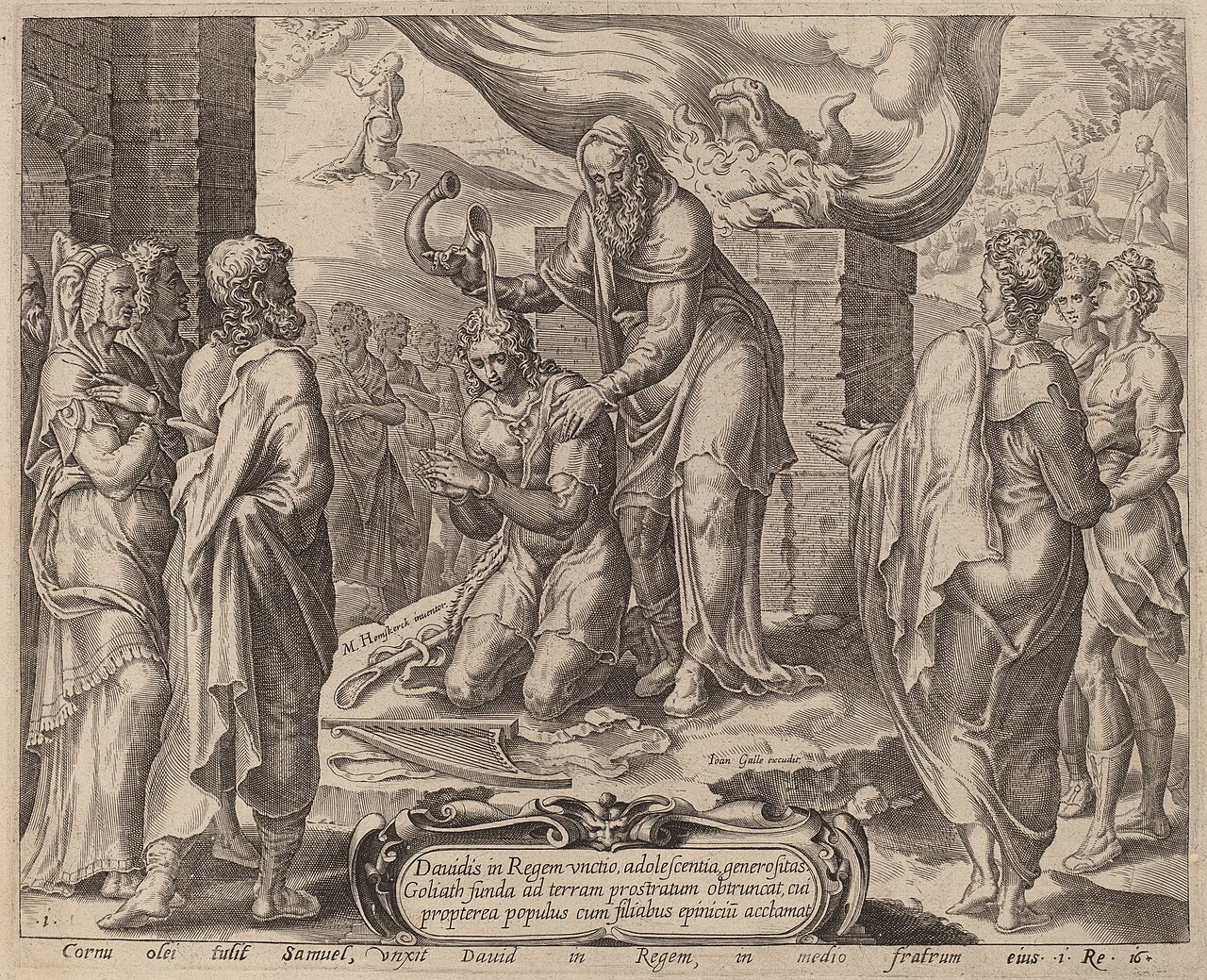
A painting of the prophet Samuel anointing the youthful David with oil among his older brothers.
“The Lord looks on the heart.” Samuel anoints David (1 Samuel 16). Passed over by everyone, the youngest son is called in from the sheep — because God does not choose the way people do, by height and appearance. National Gallery of Art, Washington. CC0, via Wikimedia Commons.

II · Walking Through the Story

A throne lost and a shepherd found

1 Samuel 13–15

The unraveling of Saul

Twice Saul fails a test of obedience, and both times the failure looks small, which is the whole point. At Gilgal he grows impatient waiting for Samuel and offers the sacrifice himself, a thing not his to do. Then, told to devote the Amalekites and their plunder entirely to destruction, he spares the king and the best livestock and blames the people, then tries to dress it up as worship. Samuel's reply is one of the great lines of Scripture: "To obey is better than sacrifice" (15:22). God was never testing Saul's competence. He was testing whether Saul would be a king under the King, and Saul kept treating God's commands as suggestions he could improve. The throne is torn from him.

1 Samuel 16

God chooses a shepherd

Samuel is sent to Bethlehem to anoint a new king from Jesse's sons. One by one the tall, impressive older brothers pass by, and God declines them all with the verse at the heart of the book: "The Lord sees not as man sees: man looks on the outward appearance, but the Lord looks on the heart" (16:7). The youngest, David, is out with the sheep and has to be sent for. He is anointed, and the Spirit rushes on him. Then, in a stroke of irony only the writer can see coming, this future king is brought into Saul's court to soothe the tormented old king with his harp.

III · A Study in Contrast

Saul and David

The book sets the two kings side by side on purpose. The difference is not talent, and it is not even a perfect obedience, since both men sinned grievously. The difference is the heart underneath, and what each man did the moment he was caught.

King Saul

Chosen byThe people's demand
First impressionTall, handsome, the obvious pick
When confrontedExcused himself, blamed others, clung to the crown
Toward GodUsed Him; obeyed when convenient
EndRejected; died on Mount Gilboa

David

Chosen byGod's own selection
First impressionOverlooked youngest, out with the sheep
When confrontedBroke, repented, owned his sin (seen fully in 2 Samuel)
Toward GodSought Him; waited rather than seize the throne
EndAn everlasting covenant and throne

"The Lord has sought out a man after his own heart" (13:14). That phrase does not mean David was sinless; the next book makes painfully sure you know he wasn't. It means his heart kept turning back to God. When David finally fell, he broke; when Saul was caught, he managed the optics. The throne went, in the end, to the one who knew how to repent.

IV · Going Deeper

God sees what no one else can

"Man looks on the outward appearance, but the Lord looks on the heart." That single verse (16:7) is both the most comforting and the most exposing line in the book. Comforting, because it means God is not fooled by your unimpressive résumé, your ordinary face, your lack of platform; He sees a heart that loves Him and counts it as the only credential that finally matters. Exposing, because it means He is also not fooled by your polished surface, your reputation, your Sunday best; He sees straight past all of it to what is actually there. We are known all the way down, and still chosen. That is the gospel in one verse.

People to Know

The one God chose

David
The shepherd anointed
  • TribeJudah
  • Chosen byGod Himself
  • WasThe youngest
  • PicturesThe Son of David

"The LORD looks on the heart."1 Samuel 16:7

Lesson: God passed over the tall, obvious brothers for a shepherd whose heart was His. He chooses by what only He can see.

For Discussion & Reflection

Study questions

Talk it through

  1. Saul's fatal failures both looked small. Why does God care so much about obedience in the private, unwatched places? Discuss
  2. "To obey is better than sacrifice." Where are we tempted to offer God religious activity as a substitute for actually doing what He said? Discuss
  3. "The Lord looks on the heart." Talk about how that truth both comforts you and unsettles you. Discuss
  4. God passed over the impressive brothers for the overlooked youngest. Who do you tend to overlook that God might be choosing? Discuss

Reflect quietly

  1. Saul managed his image; David, when he finally fell, broke and confessed. When you're caught in something wrong, which instinct rises first in you, the cover-up or the confession? Reflect
  2. God sees your heart all the way down and chose you anyway. Sit with being fully known and still wanted. Reflect

Next Week

Week 11 · David & Goliath to Saul's End

The giant in the valley, a friendship that gave everything away, years on the run, and a throne David refused to seize by force. 1 Samuel 17–31.