Movement IV · 1 Samuel · Week 8 · 1 Samuel 1–7

Hannah, Samuel & the Ark

The monarchy begins not with a battle but with a broken woman praying so hard the priest thinks she is drunk. From her tears comes a prophet, and from the ruins of a corrupt priesthood, a new voice for a leaderless nation.

I · The Bridge

From judges to kings

Standing in the gap between the chaos of the judges and the throne of David is one towering figure: Samuel. He is the last of the judges and the first of the great prophets, the only man in Scripture who anoints not one king but two. When the book opens, Israel is leaderless and adrift, the priesthood is corrupt, and "the word of the Lord was rare in those days; there was no frequent vision" (3:1). This week covers the years before any king, when God quietly raised up the man who would midwife the whole transition.

The book asks one big question, and asks it in several forms: what kind of king does Israel really need? Before that question is even raised, God is already answering it in miniature, in the way He works: not through the powerful and impressive, but through a grieving woman's prayer and a child who learns to listen. The opening chapters tell you which way God's universe tilts before the politics ever begin.

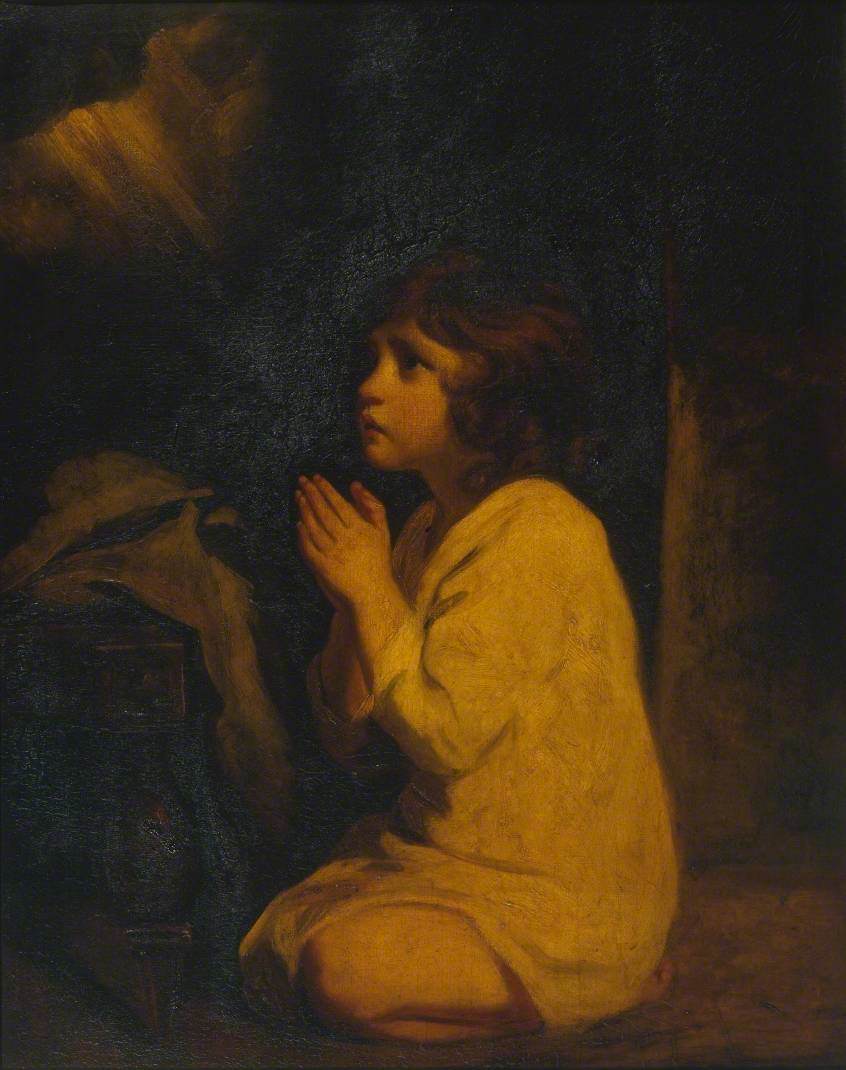
Joshua Reynolds's painting of the child Samuel kneeling in prayer at night, hands clasped, looking upward.
“Speak, for your servant hears.” Joshua Reynolds, “The Infant Samuel” (1776). Before the politics of kings begins, God is already at work — in a grieving woman's prayer and a boy who learns to listen in the night (1 Samuel 3). Public domain, via Wikimedia Commons.
Timeframe
Roughly 1100–1050 BC, from Samuel's birth to the Ebenezer victory.
This week
1 Samuel 1–7: Hannah's prayer and song, Samuel's calling, the ark captured and returned, and Ebenezer.
Big idea
God topples the proud and lifts the lowly; He will not be used by His people or held by His enemies.
Key line
"Speak, for your servant hears." (3:10)

II · Walking Through the Story

Four scenes before the throne

1 Samuel 1–2

Hannah's prayer, and a song that echoes for centuries

The whole monarchy begins not with a battle but with a broken woman praying so hard the priest assumes she's drunk. Hannah is barren, mocked by her rival, and she pours out her soul to God, vowing that if He gives her a son she will give the son back to Him. God answers; she names him Samuel and, weaned, hands him over to serve at the tabernacle. Then she sings (2:1–10) a hymn about a God who topples the proud and lifts the lowly, who reverses every expectation. A thousand years later a young woman named Mary, told she will carry the King, will sing almost the same song (Luke 1:46–55). The book opens by telling you which way God's universe tilts: toward the humble.

1 Samuel 2–3

A corrupt priesthood and a boy who listens

Eli's sons, Hophni and Phinehas, are called "worthless men" who treat the offerings of God with contempt and prey on the worshipers. Against that rotting backdrop, the boy Samuel hears his name called in the night and finally answers, "Speak, for your servant hears" (3:10). The contrast is the point: the men who should hear God are deaf, and God speaks instead to a child who will listen. A new voice arrives precisely as the old order collapses under its own corruption.

1 Samuel 4–6

The ark captured, and the glory departed

Israel drags the ark of the covenant into battle like a lucky charm, treating God as a weapon they can aim. They are routed, the ark is captured, Eli's sons die, and old Eli topples backward and dies at the news. A dying mother names her newborn Ichabod, "the glory has departed." But God is no one's trophy. Among the Philistines, the idol Dagon keeps falling face-down before the ark, plagues break out, and the terrified enemy ships it back. The lesson cuts both ways: God will not be used by His people, and He will not be held by His enemies. He defends His own glory.

1 Samuel 7

Ebenezer: thus far the Lord has helped

Samuel, now leading, gathers the nation at Mizpah and calls them to throw away their idols. When the Philistines attack, God thunders against them, and Israel wins without really fighting. Samuel sets up a stone and names it Ebenezer, "stone of help," saying, "Till now the Lord has helped us." It is the high-water mark of the old way, with God Himself as Israel's only king, and it is the last calm moment before everything changes.

People to Know

A praying mother and the boy who listened

Hannah
The praying mother
  • StruggleBarrenness
  • VowGave her son back
  • SonSamuel
  • LegacyA song of reversal

"For this child I prayed, and the LORD has granted me my petition."1 Samuel 1:27

Lesson: Honest, desperate prayer moves the heart of God. Hannah's private grief became the doorway to a prophet and a kingdom.

Samuel
Prophet & kingmaker
  • RolesJudge, priest, prophet
  • Heard GodAs a boy
  • AnointedSaul & David
  • Marked byIntegrity

"Speak, for your servant hears."1 Samuel 3:10

Lesson: A listening heart is the start of a faithful life. Samuel led a nation because he first learned, as a child, to hear God.

For Discussion & Reflection

Study questions

Talk it through

  1. The monarchy begins with one woman's desperate prayer, not a political movement. What does that say about where God starts the things that matter most? Discuss
  2. Hannah's song and Mary's Magnificat both celebrate a God who lifts the lowly and topples the proud. Where do you see God's universe tilting that way, and where do you resist it? Discuss
  3. Israel treated the ark like a lucky charm they could aim at their enemies. How do we try to use God rather than submit to Him? Discuss
  4. God would not be used by His people or held by His enemies. What does that dual truth protect us from believing about Him? Discuss

Reflect quietly

  1. Hannah turned her deepest pain into prayer instead of bitterness. What grief are you carrying that you need to actually pour out to God rather than hold alone? Reflect
  2. "Speak, for your servant hears." Are you living in a posture that genuinely expects to hear from God, or only to be heard by Him? Reflect

Next Week

Week 9 · Give Us a King

Israel demands a king "like all the nations," and God grants the request as both gift and judgment. 1 Samuel 8–12.