Samson
Strength & ruin
- TribeDan
- VowNazirite
- EnemyPhilistines
- WeaknessDelilah
"O Lord GOD, please remember me."Judges 16:28
Lesson: Gifting is not godliness. His ruin came from inside, and grace still met him at the very end.
Movement II · Judges · Week 6 · Judges 13–21
The strongest judge of all is the most morally bankrupt, a one-man portrait of Israel itself. And when his story ends, the book falls to a floor no foreign army could inflict, leaving you aching for a king who will not come from these pages.
I · The Breakdown
Set apart as a Nazirite from the womb and gifted with impossible strength, Samson is the most physically powerful and most morally bankrupt of all the judges, a one-man portrait of Israel itself: blessed beyond reason, chasing foreign women, breaking every vow, presuming on a favor he treats as a magic trick until it quietly departs and "he did not know that the Lord had left him" (16:20). That line is the saddest in the book. He had traded on God's presence so long that he no longer noticed when it was gone.
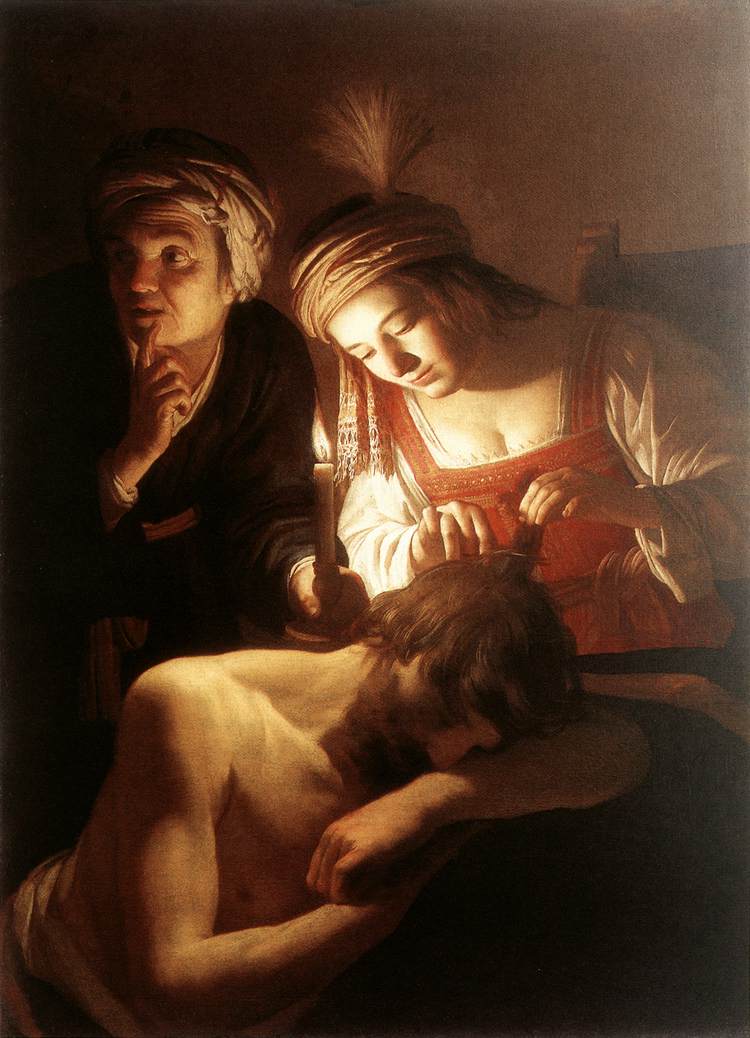
His weakness for Delilah costs him his hair, his strength, and his eyes. Yet the book refuses to end him in the dark. Blind, chained, and mocked in the temple of Dagon, he prays one last honest prayer, and God answers, and he brings the house down on more of the enemy in his death than in his life. Even Israel's most wasted deliverer is not past the reach of grace. And the writer will not give you a hero to admire. Samson rescues no one but himself, leaves no lasting peace, and dies in an enemy temple. If this is the best Israel's deliverers can do, the book is nearly ready to make its point.
Read Samson as a portrait of the whole nation and the book snaps into focus. Chosen before birth, set apart, gifted beyond measure, and yet unable to resist a single foreign attraction, breaking his vows one by one, presuming on God's favor until it slips away unnoticed. That is Israel in the era of the judges, and if we are honest, it is often us. The point is not to shake our heads at Samson. It is to see ourselves in him, and to feel how badly we need a deliverer who is nothing like him.
II · Judges 17–21
The book does not end with a judge. It ends with two horror stories, and it drops the refrain like a hammer between them: there was no king in Israel. These chapters are placed last on purpose, to show you the floor the nation had fallen to, with no foreign enemy to blame. By now the rot is entirely homegrown.
A man named Micah sets up a private shrine with a hand-made idol and hires a wandering Levite as his personal priest, religion entirely on his own terms and budget. The tribe of Dan, hunting for land, simply steals the idol and the priest as they pass and establishes organized idolatry that lasts for generations. Worship has become a thing you assemble to taste, a god you can carry off if the price is right.
A grim episode at Gibeah, deliberately written to echo the sin of Sodom, leads to the abuse and death of a woman and a war that nearly wipes the tribe of Benjamin off the map. Israel turns its swords on itself. The nation that could not defeat its enemies came within a hair of destroying its own.
It is bleak, and it is bleak on purpose. By the final verse you are meant to be aching for someone to set this right, a true king who will not merely rescue for a season but rule with a heart bent toward God. The very next book in most reading orders is Ruth, a quiet story of faithfulness in this same dark era, and it ends with a name that points ahead to the king Israel is waiting for: David.
III · Where the Book Is Pointing
By the end you can feel the book straining toward something it cannot reach. It keeps muttering, "there was no king." It keeps producing leaders who rise and rescue and then die or disappoint. The whole structure is engineered to create a longing, an unscratched itch for a leader who would be strong like Gideon without the idolatry, set apart like Samson without the weakness, righteous all the way down, and who would not die.
That longing is not answered in Judges. It is barely answered by David, the best king Israel ever got, who turns out to have his own ruinous flaws. It is finally answered only by great David's greater Son, the King who breaks the cycle not by rescuing us from foreign armies but by dealing with the enemy inside, the sin that no judge could ever defeat. Judges leaves you with a hole shaped exactly like Him, and when He finally comes, you recognize what you had been longing for all along.
People to Know
"O Lord GOD, please remember me."Judges 16:28
Lesson: Gifting is not godliness. His ruin came from inside, and grace still met him at the very end.
For Discussion & Reflection
Two traps with Judges. The first is turning the judges into flannelgraph heroes; the author is far more interested in their flaws than their feats, so resist sanding the edges off. The second is leaving the group in the gloom. The darkness is real, but it's purposeful, building an ache for the King who is coming, so land the session on that hope rather than the horror. If your group includes survivors of abuse, give a gentle heads-up before chapters 19–21, which are genuinely disturbing, and handle them with care.
Next Week
"In the days when the judges ruled." Into all that darkness, a single candle: two widows, a generous farmer, and a quiet act of loyal love holding up the whole story of redemption. Ruth 1–4.