Home/The Weeks/Week 16

Capstone · Advent · Week 16 · 2 Samuel 7; Luke 1

David's Throne and the Manger

We began with a borrowed tent on the wrong side of the Jordan. We end at a manger in Bethlehem, and a throne that has no end. Centuries of longing, all of it pointing to one Child, and He arrives right on time.

I · Looking Back

The whole road we have traveled

Joshua brought the people into the land, and even there the rest never quite held, pointing past itself to a better one. Judges showed what a people become without a king, and manufactured an ache for one who would not fail. Ruth quietly carried the royal line through a Moabite widow's loyalty and set down, in its final word, the name David. First Samuel went searching for a man after God's own heart and found a shepherd. And 2 Samuel gathered it all up when God promised David a throne that would last forever. Every book has been a signpost, and every one has pointed the same direction the whole time.

It is worth naming what these books were quietly doing to us as we read. They kept handing us leaders and then taking them away. Moses died. Joshua died. The judges rose and fell. Saul self-destructed. Even David, the king after God's own heart, committed a sin that fractured his family and his throne, and then he died too. By now you are meant to feel a specific ache, a homesickness for a king who will not fail, will not die, and will not stop loving his people. That ache is not a flaw in the story. It is the doorway the whole story was cutting into your heart.

II · One Word Left Hanging

The throne that sat empty

Everything gathered at that promise in 2 Samuel 7, and it gathered around one impossible word.

16And your house and your kingdom shall be made sure forever before me. Your throne shall be established forever. 2 Samuel 7:16

Because David died. Solomon died. The kingdom split, declined, and was finally hauled off into exile, and the throne of David sat empty for centuries. The word "forever" hung in the air, apparently unfulfilled, an outrageous promise the facts on the ground seemed to mock. And yet God would not let it fall. Through the long dark, prophet after prophet kept it burning, promising a coming Branch from David's line, a child on David's throne whose government would never end, a shepherd-king born in David's little town. Israel waited four hundred years in the silence after the last prophet, holding a promise and wondering, as they had at every Jordan before, whether God can be trusted to keep His word.
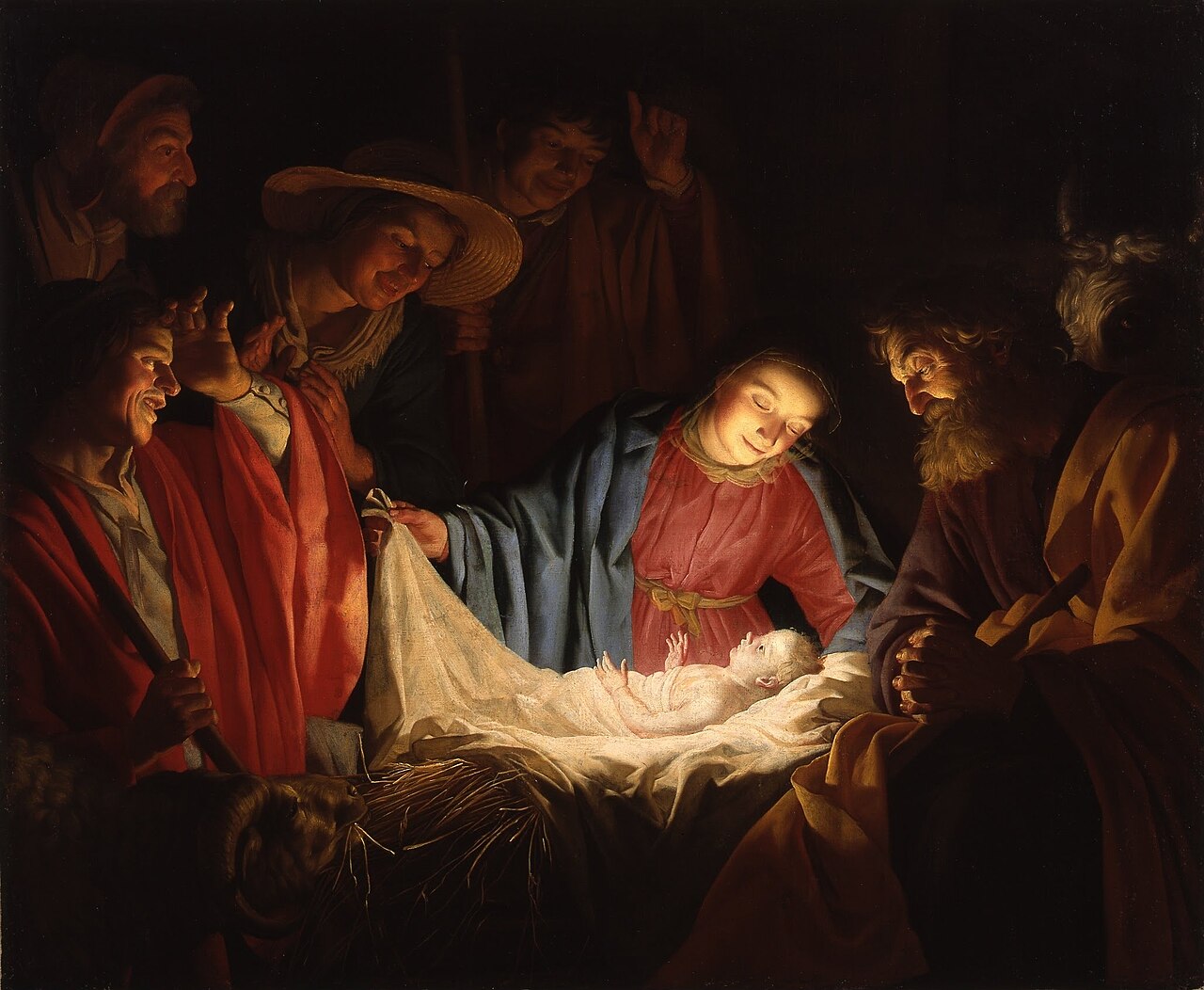
Gerard van Honthorst's candlelit Adoration of the Shepherds, light radiating from the newborn Christ as Mary, Joseph, and shepherds look on.
The King the whole road was leaning toward. Gerard van Honthorst, “Adoration of the Shepherds” (1622). After four centuries of silence, David's throne is filled — not in a palace but a stable, the light rising from the manger itself. “The Lord God will give to him the throne of his father David… and of his kingdom there will be no end” (Luke 1:32–33). Public domain, via Wikimedia Commons.

III · The Answer

Born in the city of David

And then, into that long silence, in David's own little town of Bethlehem, an angel said this to a frightened young woman named Mary:

32He will be great and will be called the Son of the Most High. And the Lord God will give to him the throne of his father David, 33and he will reign over the house of Jacob forever, and of his kingdom there will be no end. Luke 1:32–33

There it is. The everlasting throne of 2 Samuel 7 is the throne of Jesus. He is the King the ache of Judges longed for, the Redeemer the story of Ruth sketched in Boaz, the heart-after-God that 1 Samuel went searching for, the Son of David in whom the covenant finally, permanently holds. He is everything David was, with none of the rooftop and none of the grave. Born in Bethlehem, "the house of bread," to a people who had run out. Laid in a manger by a young mother who sang almost the very song Hannah had sung a thousand years before, about a God who topples the proud and lifts the lowly. The whole Old Testament leaned toward this cradle, and here, at last, the leaning is answered.

And the timing matters. Just as God brought Israel across the Jordan exactly when He said, just as the barley harvest was waiting the moment Ruth arrived, just as the shepherd was ready the moment Saul was rejected, so "when the fullness of time had come, God sent forth his Son" (Galatians 4:4). The God who kept every smaller promise in these five books kept the largest one too, on the day He had chosen before the world began. Not one word of all His good promises has failed. Joshua could have told you that.

IV · Carry It Home

From conquest to kingdom, and from David's kingdom to Christ's

We finish this study on the edge of Christmas, and that is not an accident of the calendar; it is the point of the whole arc. The series that began with a borrowed tent on the wrong side of the Jordan ends with a kingdom that has no end, and it hands you, right before His birthday, the King the whole story was aching toward. Everything you have longed for as you read, a leader who will not fail, a rest that holds, a Redeemer who pays the price, a heart wholly God's, a throne that lasts, is lying in a manger in Bethlehem.

So carry this into the manger scene when you get there. When you read Luke 2 by candlelight this year, you will not be reading an isolated Christmas card. You will be reading the last page of a story you now know by heart, the one that ran from Jericho's walls through Ruth's barley field and David's rooftop all the way here. The child in the straw is the answer to four thousand years of longing. He is the true and better Joshua who leads us home, the greater Boaz who redeems us at cost, the King after God's own heart who never falls. Come, let us adore Him.

The Lord God will give to him the throne of his father David, and of his kingdom there will be no end.

Luke 1:32–33

See the line from Ruth to Christ

For Discussion & Reflection

Study questions

Talk it through

  1. Looking back over the whole study, which book or moment marked you most, and why? Discuss
  2. These books kept handing us leaders and taking them away to build a longing for a King who would not fail. Where has that longing shown up in your own life this fall? Discuss
  3. The everlasting throne of 2 Samuel 7 turns out to be the throne of Jesus. How does knowing the Old Testament backstory change the way you will read the Christmas story this year? Discuss
  4. "Not one word of all His good promises has failed." How does the track record across these five books steady your trust for the promises you are still waiting on? Discuss

Reflect quietly

  1. The Child in the manger is everything you have been longing for as you read. What do you most need Him to be for you this Christmas, King, Redeemer, or the one whose steadfast love will not depart? Reflect
  2. God kept every promise in these books at exactly the right time. Where do you need to trust His timing rather than your own right now? Reflect
⚑ Leader Note

This is the last session, landing right before Christmas, so let it breathe and land as worship more than study. Consider closing by reading Luke 2 aloud together, now that the group knows the whole road that leads to it, and then singing a carol. If it fits your group, invite people to name one thing this study gave them. Thank them for the journey from conquest to kingdom, and point them home to the King.

The Study Is Complete

Merry Christmas

From a borrowed tent to a throne with no end. Thank you for walking the whole road. The King the story was leaning toward has come.