One spring evening on a rooftop, and everything unravels. This is the hinge the whole book turns on, and it shows both the worst of David and the very thing that set him apart from Saul.
I · Chapters 11–12
The fall, and the confession
Chapter 11 opens with a sentence that quietly indicts him before he has done a thing: "In the spring of the year, the time when kings go out to battle… David remained at Jerusalem." The king is where he should not be, idle when he should be leading, and from that one loosened thread everything unravels. The progression is awful and ordinary: he sees Bathsheba, he sends to ask about her, he takes her, he sleeps with her. When she is pregnant, he tries to cover it by recalling her honorable husband Uriah from the front, hoping he'll go home to his wife. When the decent soldier refuses to enjoy comfort while his men sleep in fields, David has him killed, murdered by the hand of the enemy and the silence of his own commander, Joab. Sin almost never arrives as a single dramatic choice. It comes one small step at a time, and each step makes the next one easier.
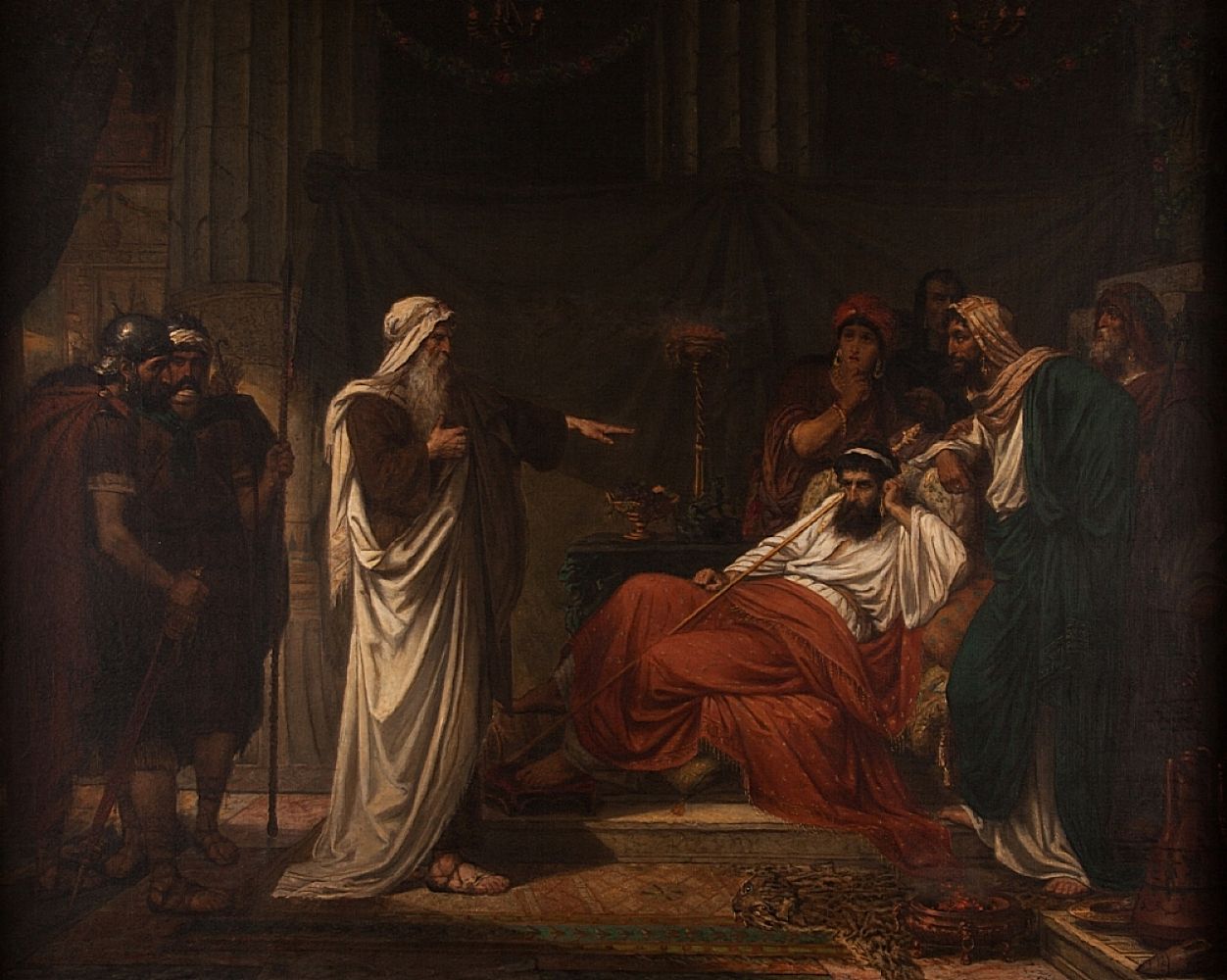
For the better part of a year David lives as though no one saw. Then God sends Nathan with a story about a rich man who stole a poor man's one beloved lamb, and when David's anger blazes against the man in the parable, Nathan turns it like a blade:
7Nathan said to David, "You are the man!…" 13David said to Nathan, "I have sinned against the Lord."
2 Samuel 12:7, 13
“You are the man.” Eugène Siberdt, The Prophet Nathan Rebukes King David. Nathan’s parable springs shut, and the prophet turns the verdict on the king himself (2 Samuel 12). Public domain, via Wikimedia Commons.
Here, at last, is the difference between David and Saul laid completely bare. Confronted with his sin, Saul made excuses and protected his image. David breaks. He does not argue, does not spin, does not minimize; he simply confesses, and out of this very moment he writes Psalm 51, which has become the church's deepest prayer of repentance for three thousand years. He is forgiven, fully and immediately. But forgiveness is not the same as the erasing of consequences, and Nathan warns that the sword will never depart from David's house. It doesn't.
II · Chapters 13–18
The long shadow
Forgiveness was immediate; consequence was not cancelled. What follows is the bitter harvest of that spring night, and the harvest looks horribly like the seed.
The sword in the house
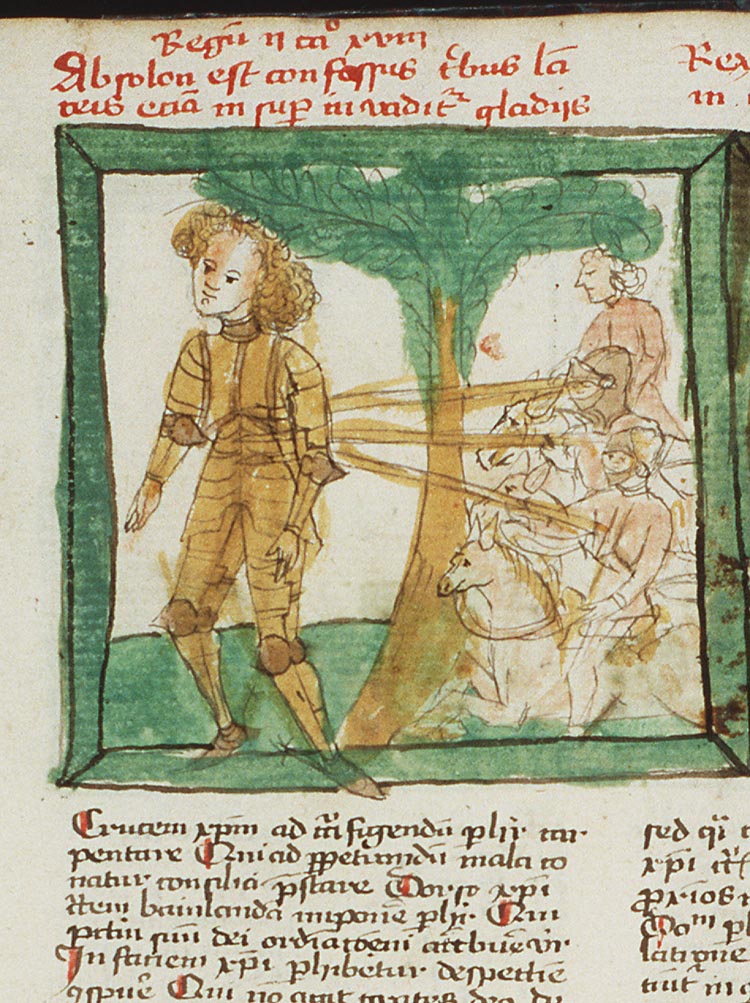
David took another man's wife; his son Amnon takes his own half-sister Tamar by force. David shed blood to cover his sin; his son Absalom sheds Amnon's blood in revenge and flees. The sins of the father are reproduced and magnified in the sons. Absalom returns, steals the hearts of the people with patient charm, and launches a full rebellion that drives his own father weeping out of Jerusalem. The revolt collapses, and against David's explicit, anguished order, Absalom is killed. The king who once danced before the ark now sobs at the city gate: "O my son Absalom, my son, my son Absalom! Would I had died instead of you" (18:33). The private sin of chapter 11 became a public catastrophe, exactly as God had said it would.
“O my son Absalom.” Absalom, David's rebel son, caught in the branches of an oak and killed against the king's explicit order (2 Samuel 18). The king who danced before the ark now sobs at the city gate.
Public domain, via Wikimedia Commons.
It is a hard stretch of Scripture, and the book does not rush you through it. But grace runs underneath even the wreckage like water under ice. David is not cast off; he grieves, he endures, he is carried through. And already the seed of restoration is planted: the child of his repentance, Solomon, is born, and the text adds a quiet line, "and the Lord loved him" (12:24). Even here, in the ruins David built with his own hands, God has not stopped writing the story of grace.
People to Know
The king who broke rather than covered
❖
David
The penitent king
Greatest fallBathsheba; Uriah
Confronted byNathan
WrotePsalm 51
HarvestThe sword at home
"I have sinned against the LORD."2 Samuel 12:13
Lesson: What set David apart was never sinlessness but a heart that ran straight back to God. He fell hard and repented harder.
For Discussion & Reflection
Study questions
Talk it through
The fall began with David being where he should not be, idle when he should have been leading. How does being out of place quietly set up bigger failures? Discuss
Sin came "one small step at a time, each step making the next easier." Where have you seen that slow progression, in others or yourself? Discuss
Saul managed the optics; David broke and confessed. What makes the difference between the cover-up and the confession in a person's heart? Discuss
David was fully forgiven, yet the consequences still played out. How do you hold together the truth that God forgives freely and that sin still leaves a harvest? Discuss
Reflect quietly
Read Psalm 51 slowly this week. Where do you need to pray it as your own, without tidying up what you bring? Reflect
Is there a "rooftop" in your life, a place of idleness or unguarded want, where you are more exposed than you admit? Reflect
⚑ Leader Note
These chapters are heavy, and they include sexual violence (the assault of Tamar in ch 13). Give a gentle heads-up, and handle it with care; some in your group may carry their own version of that wound. Keep the focus on the two things the text is doing: showing how sin harvests, and showing a God whose grace runs under the wreckage. End on the mercy, not the ruin, and consider reading Psalm 51 aloud together.
Next Week
Week 15 · The Return & the End of David
David comes home to his throne, sings his last songs, and buys the ground where the temple will one day stand. The story that began with a tent ends pointing to a house, and to a King still to come. 2 Samuel 19–24.